LADICIM participates in Ecoflowing, the project driving the decarbonization of construction
In collaboration with the Technology Centre of Components (CTC), the initiative designs industrializable mixes based on waste valorization that will reduce the sector’s carbon footprint by more than 20%
Conceiving civil engineering works without concrete is impossible today. It is an unbeatable material in terms of cost, strength, and versatility. The problem arises when analyzing its global environmental impact. Its binding component, cement, leads the world rankings for carbon dioxide (CO₂) emissions. And it is precisely to mitigate this effect that the Ecoflowing project was born. Through this joint research, the Laboratory of the Division of Materials Science and Engineering (LADICIM) of the University of Cantabria and the Components Technology Centre (CTC) seek to formulate viable alternatives. Their common goal is to drastically reduce the environmental footprint of these mixes while maintaining and even improving their performance.
The root of this high pollution lies in the manufacturing of clinker, the active ingredient that defines Portland cement. To produce it, limestone must be subjected to extreme temperatures that trigger its decarbonation. We are facing a highly energy-intensive industrial process. The result? For every tonne produced, between 800 and 900 kg of CO₂ are released into the atmosphere. Consequently, minimizing the presence of clinker is the fastest route to decarbonizing the construction sector.
Modifying the recipe for the planet’s primary construction pillar is no simple task. Any reduction in the binder requires absolute guarantees regarding mechanical feasibility, durability, and the final safety of the structure.
“The challenge is not only to replace the cement, but to gain an in-depth understanding of the behavior of the new material so as not to penalize its fluidity in the fresh state or its long-term strength,” explains Professor Carlos Thomas, lead researcher of LADICIM in this project and a specialist in sustainable concrete. “In Ecoflowing, we will delve into the design of advanced dosages through the incorporation of supplementary cementitious materials originating from the recovery of industrial and construction waste,” he details.
Circular economy and high performance
Following the criteria of the circular economy, the team aims to achieve carbon footprint reductions exceeding 20% compared to standard market options. Reaching this goal requires researchers to study both the hydration kinetics and the reactivity of the new compounds with maximum rigor.
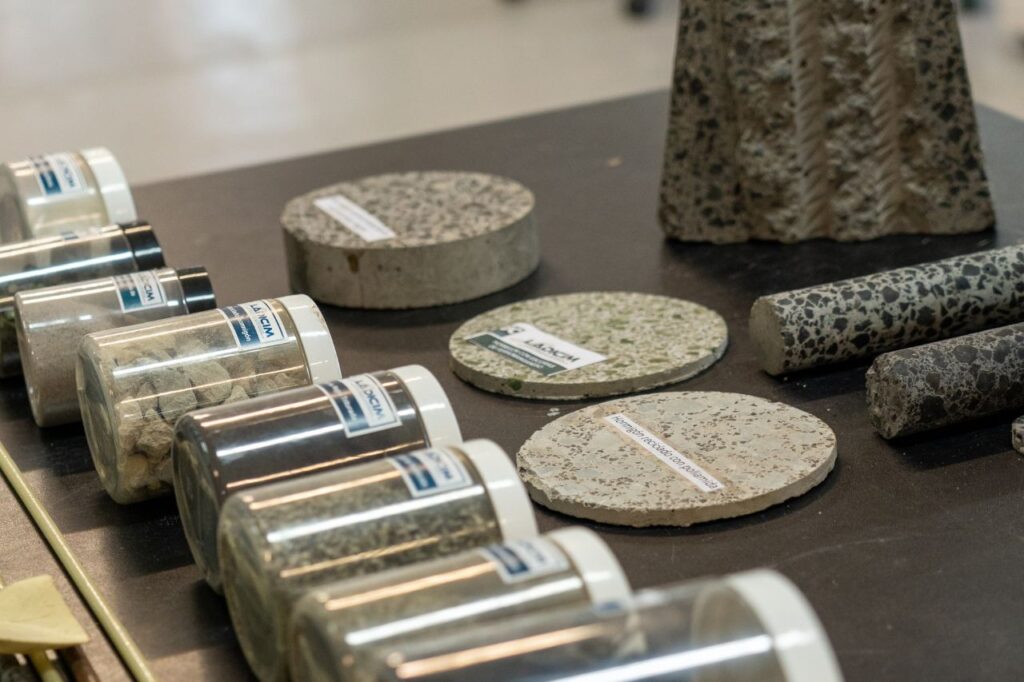
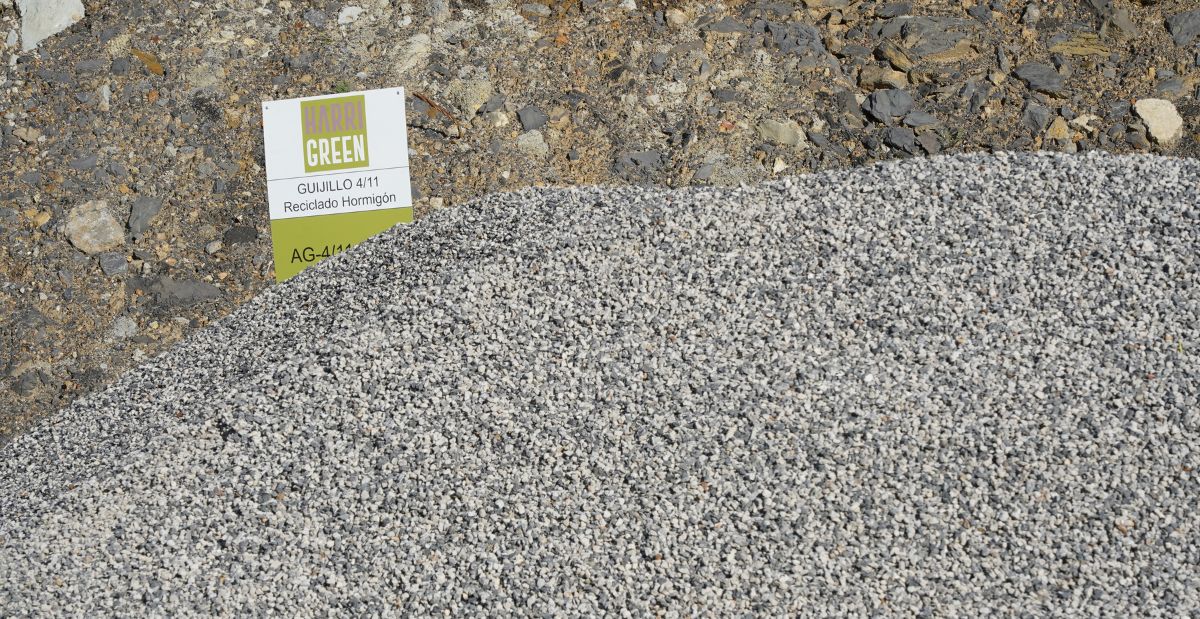
The research is not limited to intervening in the cementitious matrix. It also addresses the improvement of particle packing by replacing part of the natural aggregates with recycled materials. Once formulated, the resulting concretes will undergo exhaustive testing. The ultimate goal is to ensure they strictly comply with current regulations and that their long-term resistance does not succumb to severe pathologies, such as carbonation or corrosion.
LADICIM’s participation in this technological breakthrough stems from its research track record in the field of sustainability. In fact, the Laboratory leads the LOWCBM-Net Network, a national scientific consortium dedicated to promoting eco-efficient cement-based materials.
Such a level of technical expertise has been forged through high-impact previous works, such as RECNHOR, CLEAM, SEACOND, ISOBARA and ISOTACA. Within these projects, the University of Cantabria laboratory has designed very high-strength circular concretes for various types of structures. This technical proficiency is further backed by its role in knowledge transfer to companies regarding marine durability and its direct involvement in the founding of the Spanish Association of Eco-Sustainable Concrete (EcoH).
With the deployment of Ecoflowing, a pragmatic horizon is drawn for modernizing civil engineering. By fostering the synergy between materials science and waste valorization, it is demonstrated that designing tomorrow’s infrastructure without harming the ecosystem is a fully achievable goal.
Más Noticias