

LADICIM provides Chemical Engineering training to twenty students from Cornell University
Future professionals from one of the world’s top ten civil engineering institutions complete their training at the School of Civil Engineering of the University of Cantabria and conduct on-site analysis of the Pedreña-Somo bridge construction works
The University of Cantabria is hosting 21 students from Cornell University (United States) this academic year, a group that has moved to Santander to complete a full training itinerary in English. Within this major international program, the LADICIM team has taken on the task of leading the practical sessions for the General Chemical Engineering course, introducing the rigors of quality control to future American professionals.
The arrival of this group of students is linked to the recent launch for the 26/27 academic year of Global Start Cantabria, a new joint program promoted by the Vice-Rectorate for International Relations and Strategy. This initiative joins the well-established academic collaboration that both institutions have maintained for nearly two decades, thus complementing the historic bilateral exchange agreement that continues to be upheld and allows students to cross the Atlantic in both directions.
From the laboratory to the field
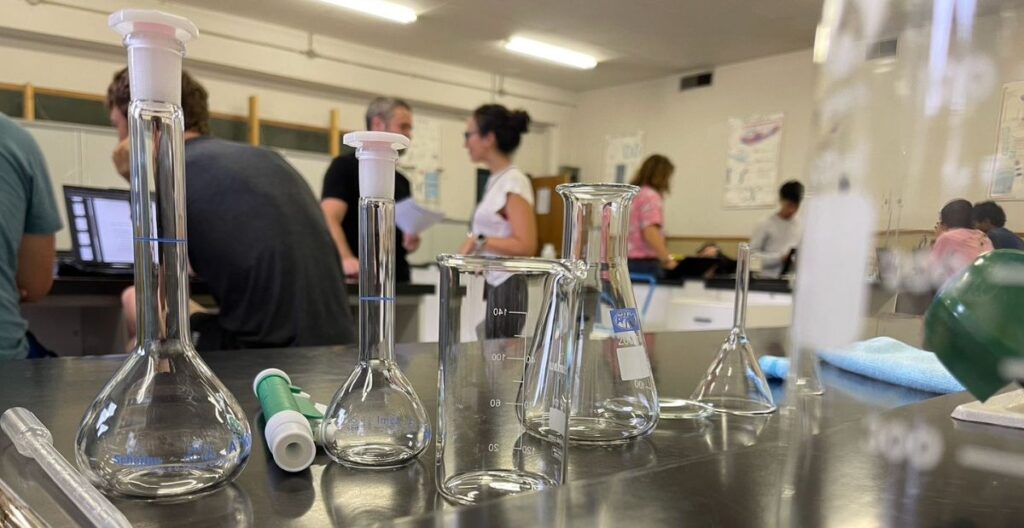
The working sessions began a few days ago with several technical tests at the facilities of the School of Civil Engineering, where students gained hands-on experience with the equipment typically used to diagnose material behavior.
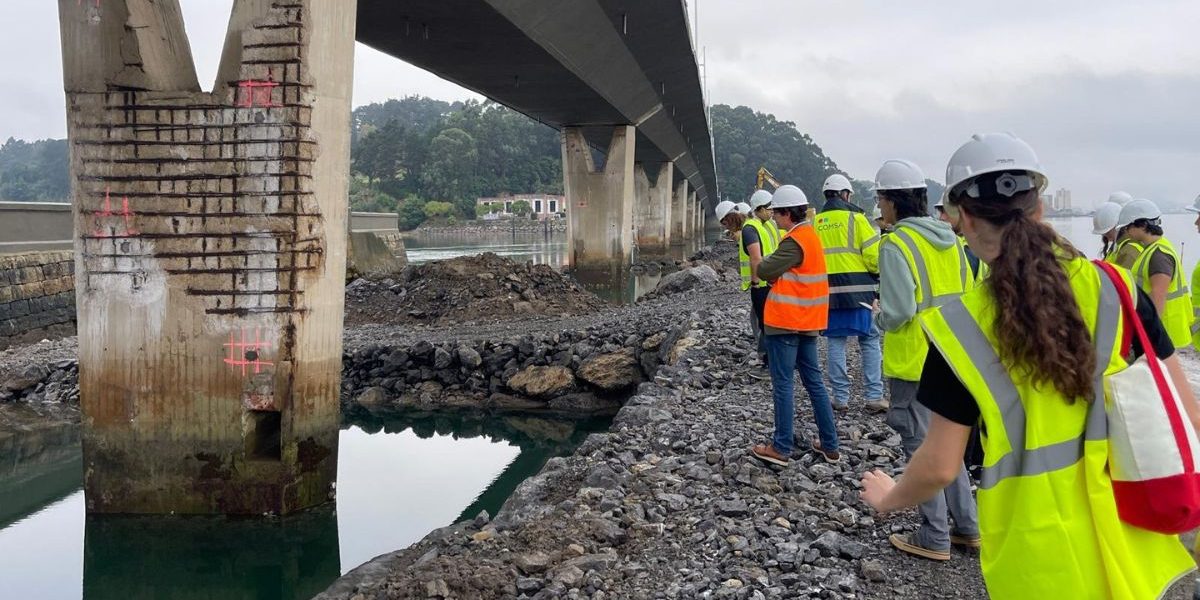
“After experiencing the tests firsthand, we wanted the instruction to move outdoors to face the reality of the field,” explains Carlos Thomas, Professor at the University of Cantabria and researcher at LADICIM. Thus, the group put on their protective equipment to conduct a technical visit to the rehabilitation works of the Pedreña-Somo bridge. Observing an infrastructure of this scale undergoing structural repair work has allowed the students to assimilate the challenges that arise throughout the life cycle of any public work.
Más Noticias

LADICIM collaborates in the Freedom project to improve the safety of nuclear power plants
The research, coordinated by CIEMAT, delves into the use of mini-CT specimens and Artificial Intelligence to characterize the integrity of the reactor pressure vessel in

LADICIM aims to fortify floating wind with more durable, safer and more sustainable platforms
In a consortium with SEAPLACE, IHCantabria, and UPM, the Cantabrian laboratory will lead the development of green and self-healing concretes to optimize the CROWN floating
LADICIM participates in European project that applies AI to extend the life of nuclear power plants
ENTENTE, coordinated by CIEMAT, lays the groundwork for Materials Informatics to more accurately predict reactor vessel degradation and enhance the safety of its long-term operation