
Professor Carlos Thomas appointed Full Professor at the University of Cantabria
The Quality Manager of LADICIM culminates his academic career with an appointment recognizing his research and teaching work on recycled concrete, paving the way for new eco-efficient solutions applicable on an industrial scale.
The decarbonization of the construction sector demands an accelerated transition toward the use of secondary raw materials, a scenario where the design of new cementitious mixtures proves decisive. It is precisely at this intersection between civil engineering and industry that Professor Carlos Thomas operates; his recent appointment as a Full Professor of Materials Science and Metallurgical Engineering bolsters the technical capacity of LADICIM, the laboratory at the University of Cantabria (UC) where he serves as Quality Manager.
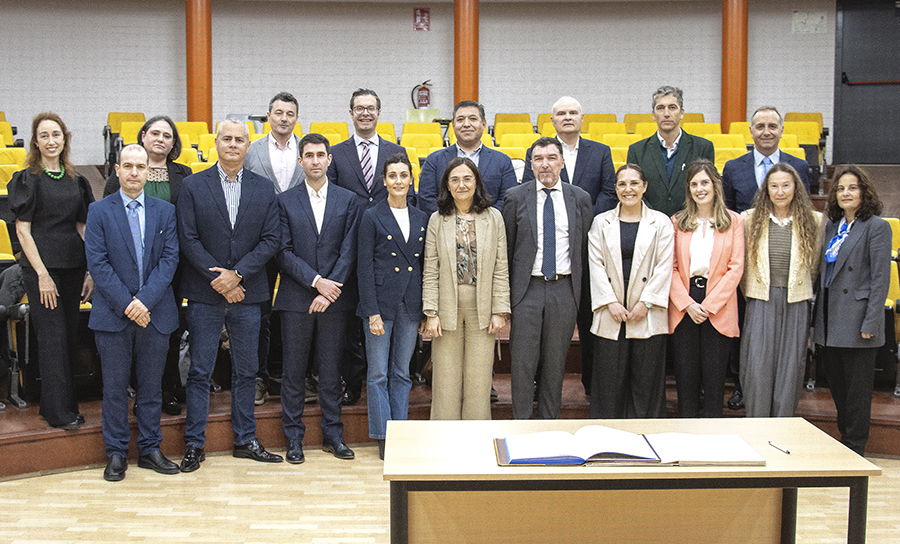
After successfully completing the competitive selection process earlier this year, the joint inauguration recently formalized in the Aula Magna of the Interfacultativo Building consolidates his position within the institution.
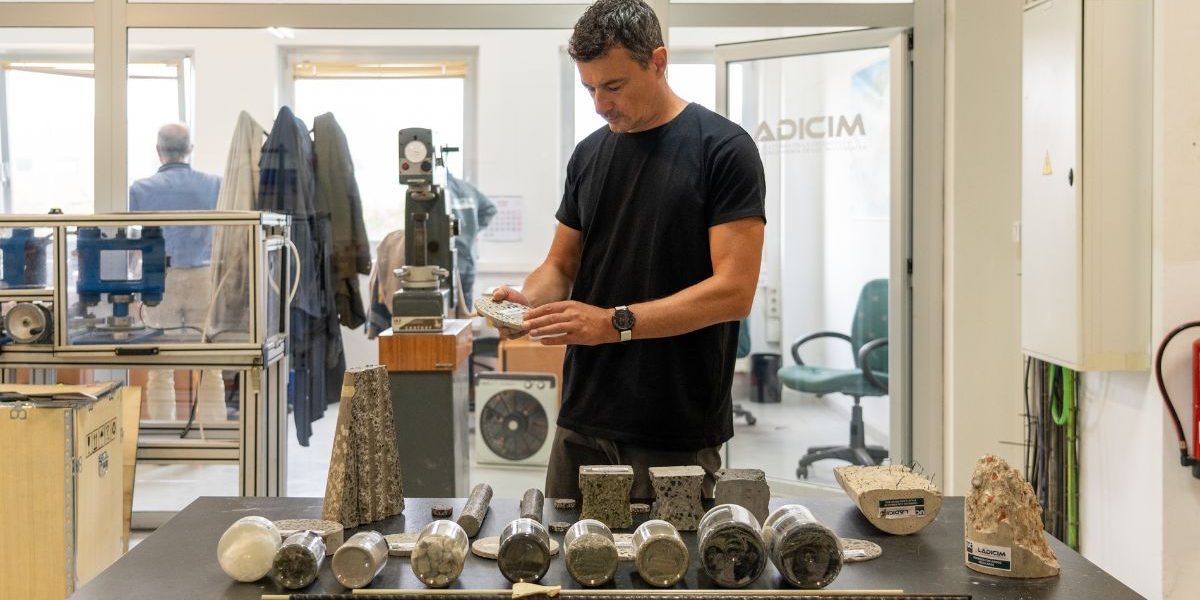
The replacement of traditional aggregates with construction and industrial waste requires a highly precise understanding of the fatigue behavior of the resulting elements under dynamic loads. To achieve this, the team led by Professor Thomas designs and subjects various recycled mortars to mechanical stress, seeking to characterize their actual durability against demanding European building regulations.
Over the last decade, their research environment has conducted physical and microstructural analyses of mixtures incorporating complex by-products. These sustained analyses have generated more than 100 indexed scientific publications and an h-index of 35, resulting in several of their articles on strength limits in eco-efficient composites being positioned among the most downloaded papers on the ScienceDirect academic platform. The rigor of these laboratory data has led them to hold the position of Editor-in-Chief of the prestigious Journal of Building Engineering, published by Elsevier, and to have already supervised eight doctoral theses.
Industry Partnerships
Before committing fully to academia and university research, his technical background at multinational corporations such as Mercedes-Benz or Bosch-Siemens provided him with a pragmatic methodological approach that he applies today in the daily management of the Cantabrian laboratory.
Thanks to this applied perspective, the group has successfully integrated the validation of repair materials into more than 50 R&D&I consortia, collaborating closely with companies within the industrial sector. Active initiatives with state and European funding, such as the SEACOND project, demonstrate the utility of this collaborative approach, as they enable testing the performance of concretes before entering their commercialization phase.
Validating the structural integrity of infrastructures executed with alternative materials is a mandatory step if global energy costs are to be reduced. Strengthening highly specialized technical profiles within the university ecosystem facilitates the crystallization of small-scale developments into standards and patents, providing construction companies with reliable tools to erect cleaner and more efficient buildings in the short term.
Más Noticias

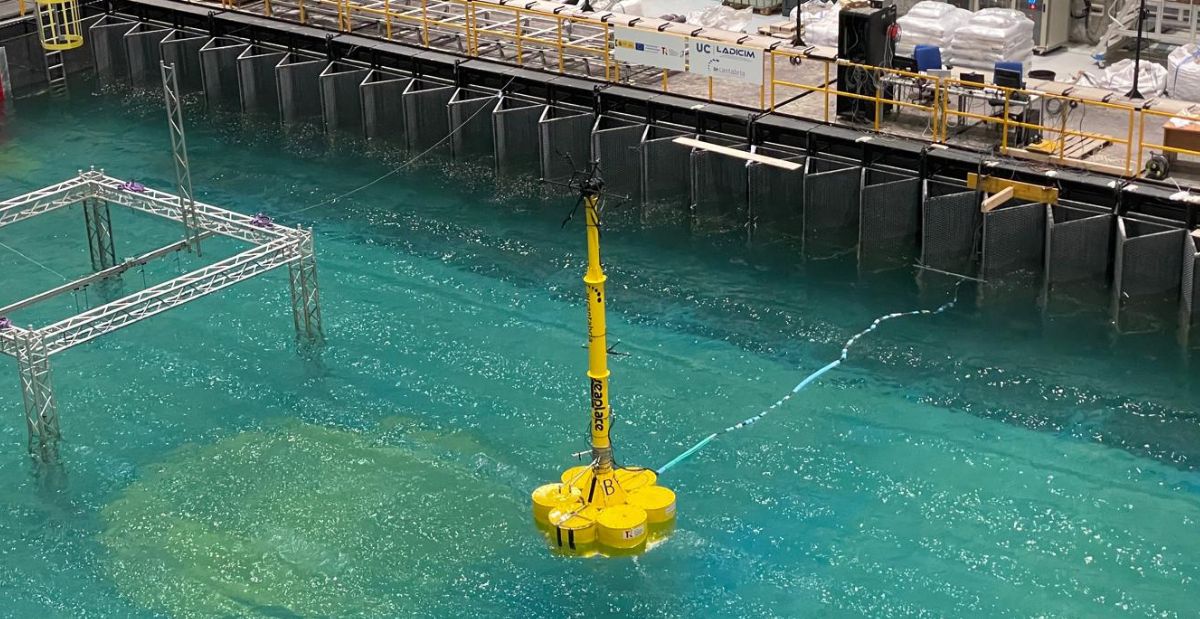
LADICIM is participating in the development of a new generation of floating concrete platforms for offshore wind energy
The ISOBARA project, in collaboration with SEAPLACE and IHCantabria, designs industrializable solutions to reduce costs in floating wind farms The energy transition toward a low-carbon
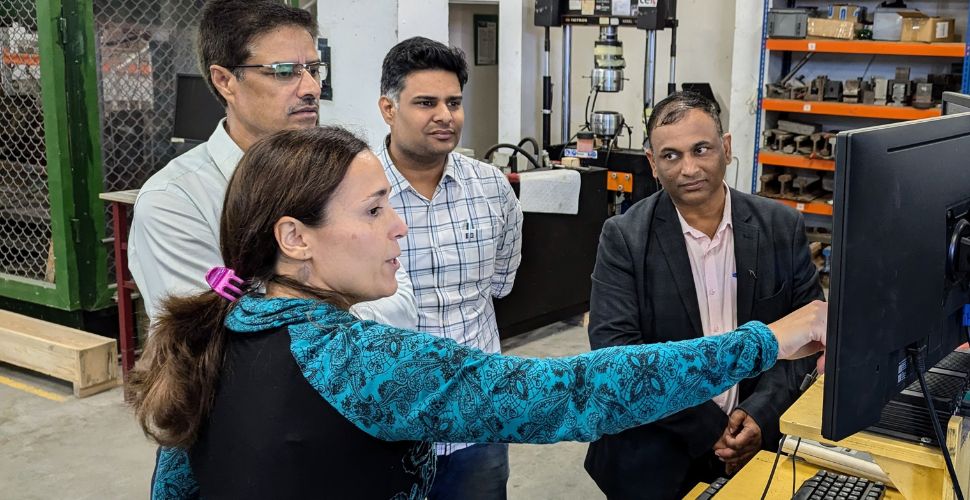
LADICIM Participates in the Development of Metropolitan Transport in India
The Laboratory of the Division of Materials Science and Engineering has renewed its collaboration agreement with Patil Rail, one of India’s leading companies specializing in
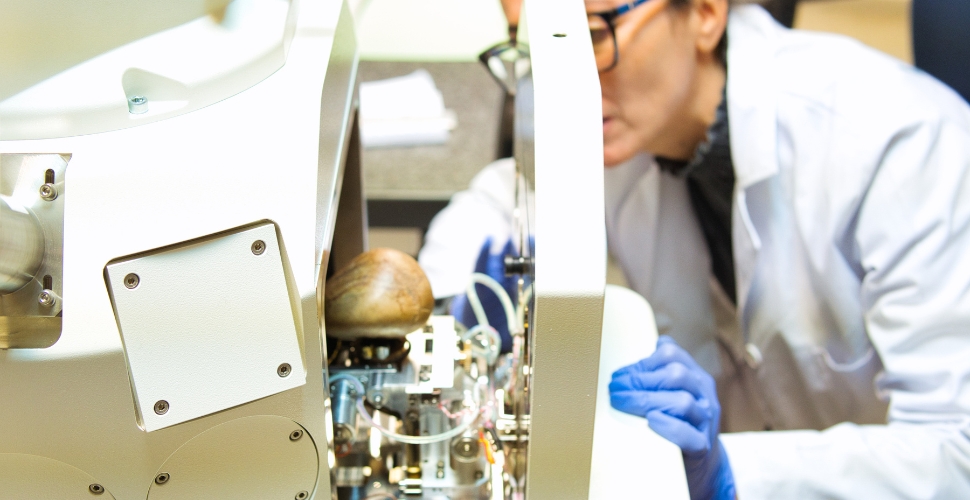
LADICIM Applies Materials Science to the Study of Archaeological Heritage
The Archaeometry and Heritage Unit has been collaborating for over 30 years with archaeologists and researchers to analyze historical artifacts using advanced non-destructive techniques. Archaeology