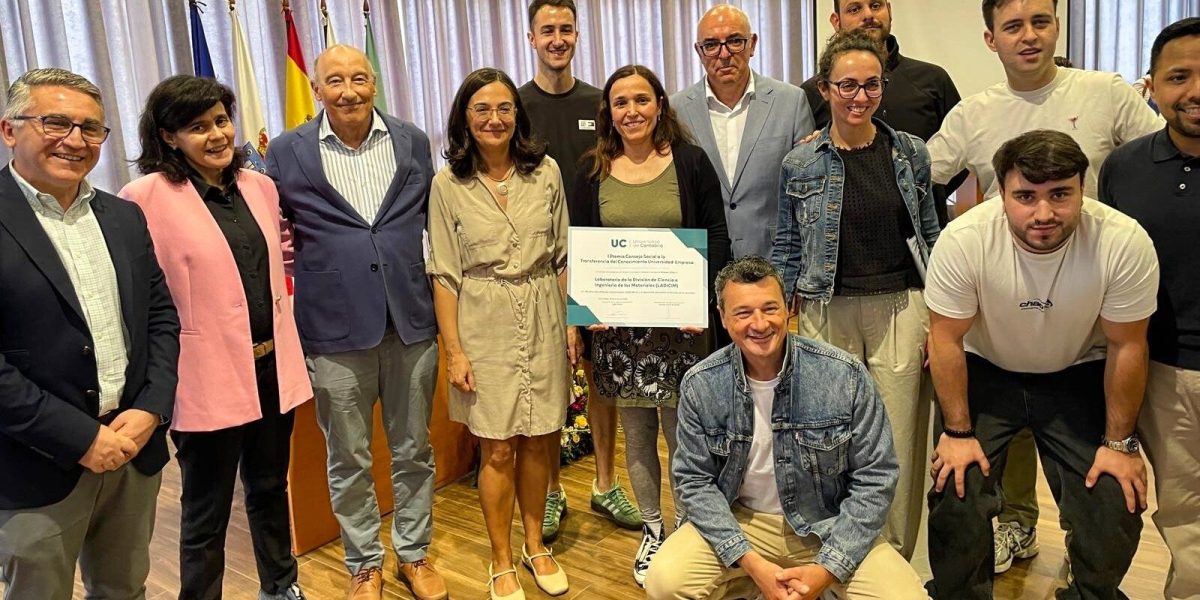
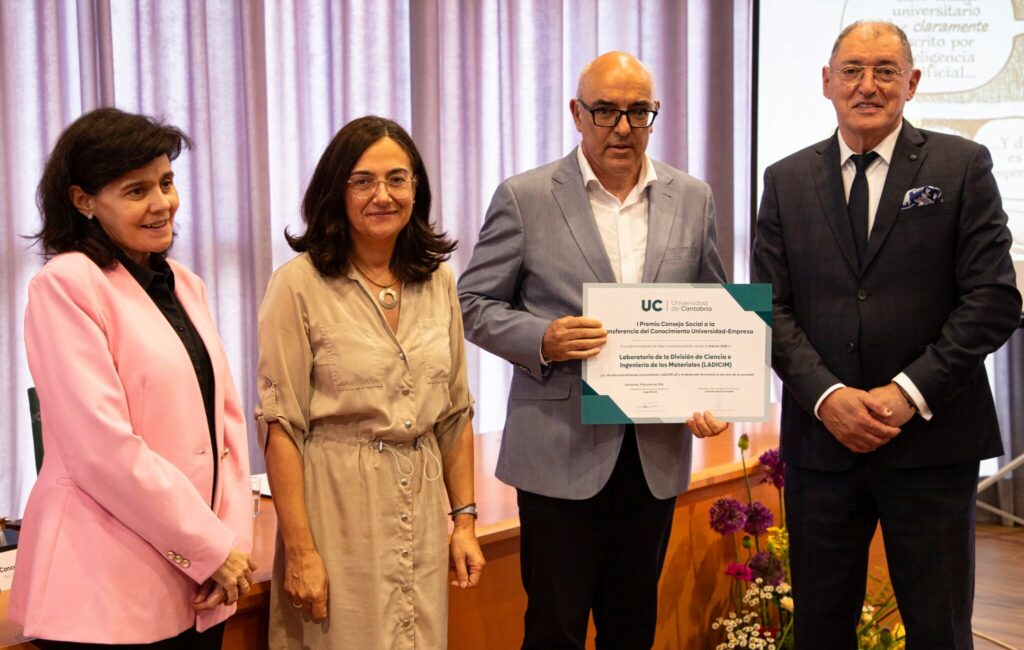
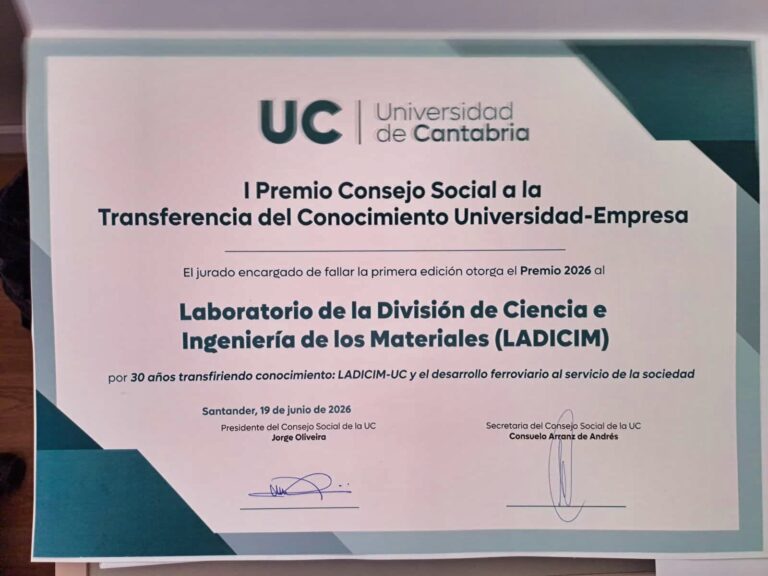
LADICIM wins the first Knowledge Transfer Award of the University of Cantabria
The Social Council award recognizes more than three decades of solving complex industrial challenges and the Laboratory’s diversification into data analysis and biomaterials to consolidate a scientific model of direct return to society.
Moving down to the physical scale is essential when designing a railway network or planning a port platform. Materials must be subjected to extreme mechanical loads to understand their real limit, abandoning any prior theoretical speculation. Under this strict premise of pragmatic science, the Materials Science and Engineering Division Laboratory (LADICIM) has been operating for more than three decades, and the Social Council of the University of Cantabria (UC) has just awarded it the I University-Business Knowledge Transfer Award. Prevailing in this first edition, within the framework of a competitive ecosystem of excellence institutes and research groups orbiting the campus, confirms the solidity of a unique model where researchers transform pure testing into operational solutions for the market.
Becoming the first to receive this institutional award underscores the importance of maintaining a stable connection with the industrial sector over time. During the official ceremony, presided over by Rector Conchi López, the President of the Social Council, Jorge Oliveira, presented the distinction, praising a trajectory that is best explained by its figures. In the railway superstructure area alone, the laboratory’s turnover has exceeded 5.1 million euros in the last five years. Reaching revenues of 3.2 million from strictly private contracts demonstrates absolute technical confidence in LADICIM by companies.
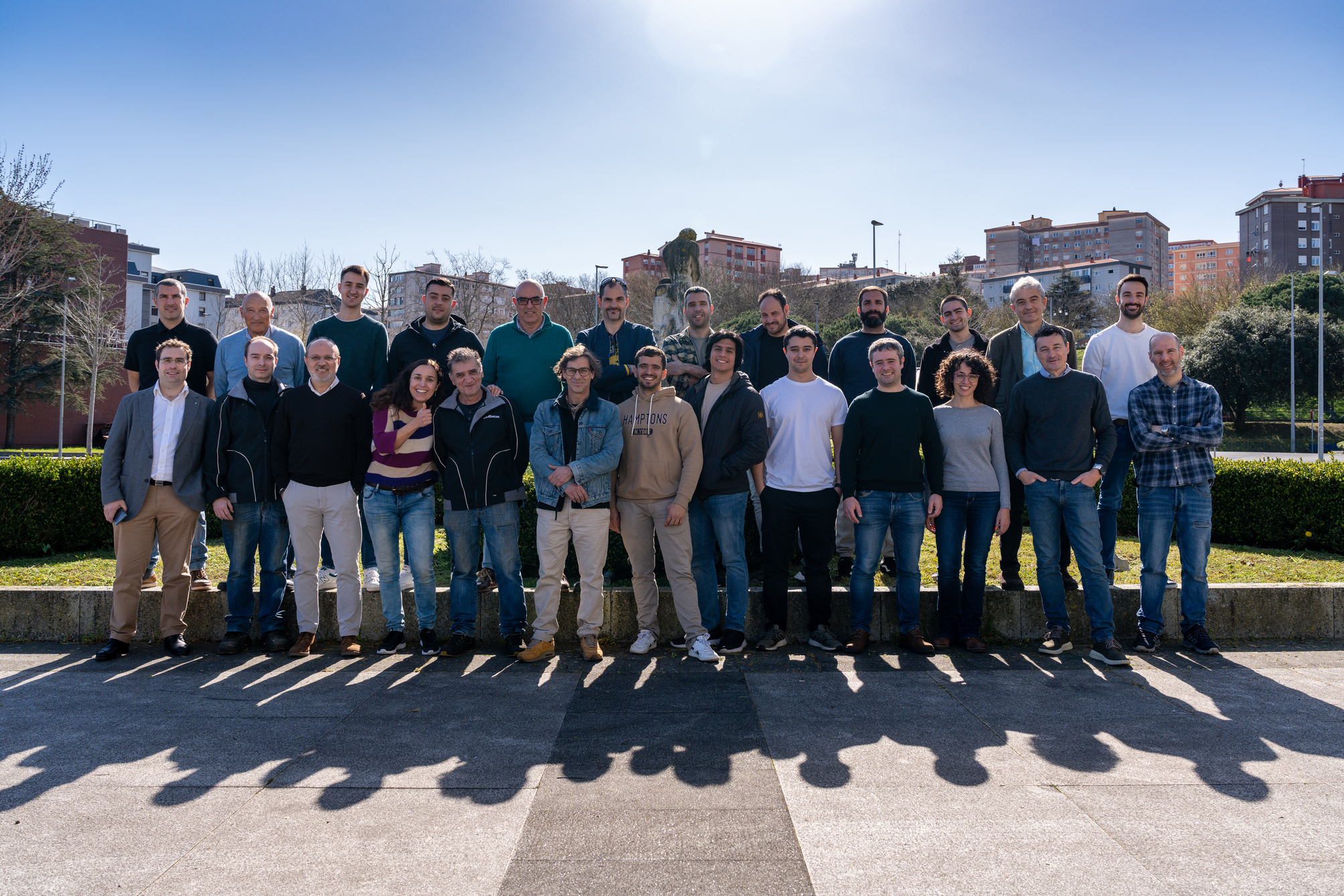
Professor Emeritus Federico Gutiérrez-Solana founded the group in the 1980s. Today, its current director, José Antonio Casado, leads a team of some thirty specialists with the same founding philosophy: “This award recognizes an approach to research linked to the real needs of society,” explains Casado, noting that the historical issuance of more than 300 annual technical reports supports critical engineering decisions worldwide.
Global railway reach
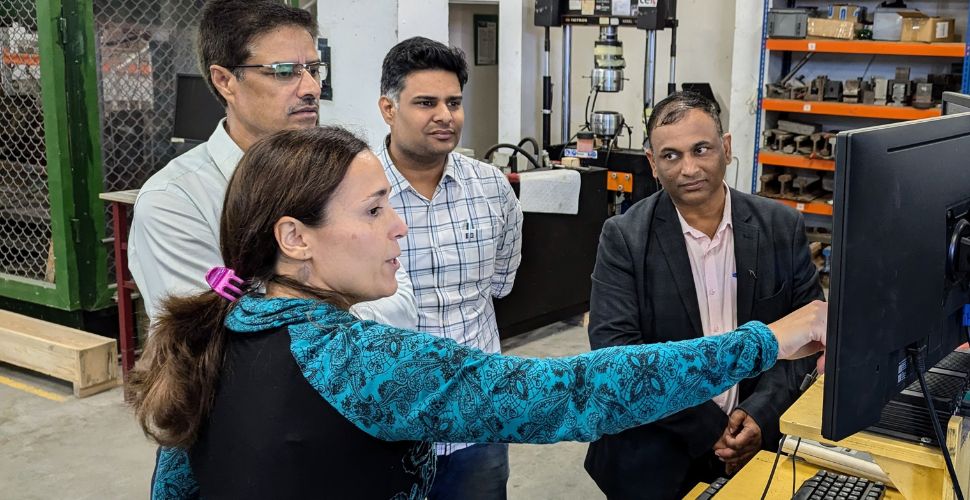
Certifying the safety of a convoy traveling at 300 kilometers per hour in a desert environment requires subjecting metals to relentless stress. The Cantabrian research group took on the direct certification of sleepers and welds for the Medina-Mecca high-speed rail, an international technical milestone that definitively accelerated its expansion. Today, a multitude of components validated in Santander operate seamlessly across the metropolitan networks of Lima, Barcelona, or Madrid. Furthermore, the signing of major agreements with Asian manufacturers such as Patil Rail or Pandrol Rahee Technologies is exporting this methodology to the massive and demanding metro systems of Chennai, Bangalore, and New Delhi.
All this cross-border deployment rests on an unyielding administrative pillar. Maintaining continuous ENAC-ILAC accreditation since 1997 serves as a master key, allowing structural solutions approved by the Cantabrian laboratory to be legally valid in over 120 countries. Industry giants such as Vossloh, Railone, or Arcelor visit the Cantabrian laboratory’s facilities to validate their prototypes. On a domestic level, its recent participation in the DINATRANS innovation project stands out, where the complex dynamic transition between traditional ballasted track and modern slab track is analyzed alongside Ferrovial.
Predictive Anticipation and AI
Long before casting the steel of a fastening or pouring a concrete block, anticipating failure is vital. Through the Finite Element Method (FEM), LADICIM researchers have successfully modeled thermomechanical scenarios using advanced software. However, these simulations result in massive data volumes that exceed traditional scrutiny capacity, which is precisely when Data Analytics comes into play.
Artificial intelligence has completely permeated the Laboratory’s operational dynamics. Through the INTELEST project, funded by the Government of Cantabria, the team designs Machine Learning and Deep Learning algorithms to resolve industrial bottlenecks. Far from being limited to basic research, the scope of this technology already makes it possible to predict neutron irradiation embrittlement in the thick steels of nuclear pressure vessels. In parallel, the steel industry currently applies reinforcement learning to optimize the energy consumption of its induction furnaces, while sophisticated transfer learning methods classify the microstructure of thousands of castings at a speed that redefines factory quality controls.
New construction formulas
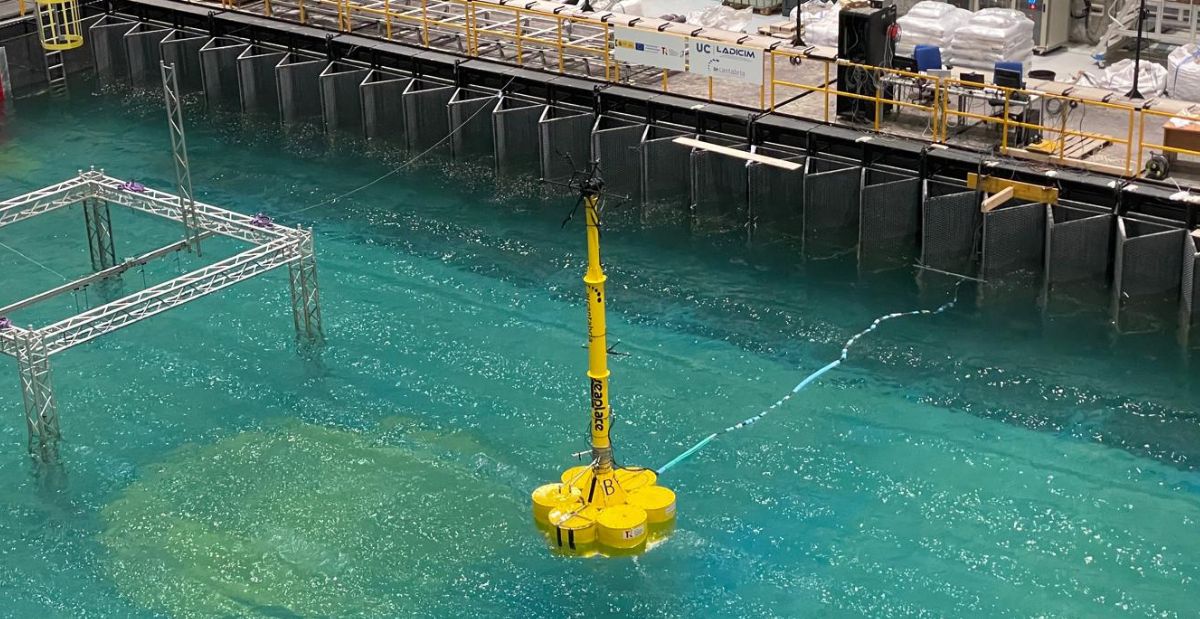
LADICIM develops high-strength self-compacting eco-concretes for offshore structures and reefs, combating corrosion. To reduce the carbon footprint in construction, they replace traditional components with steel slag and recycled aggregates.
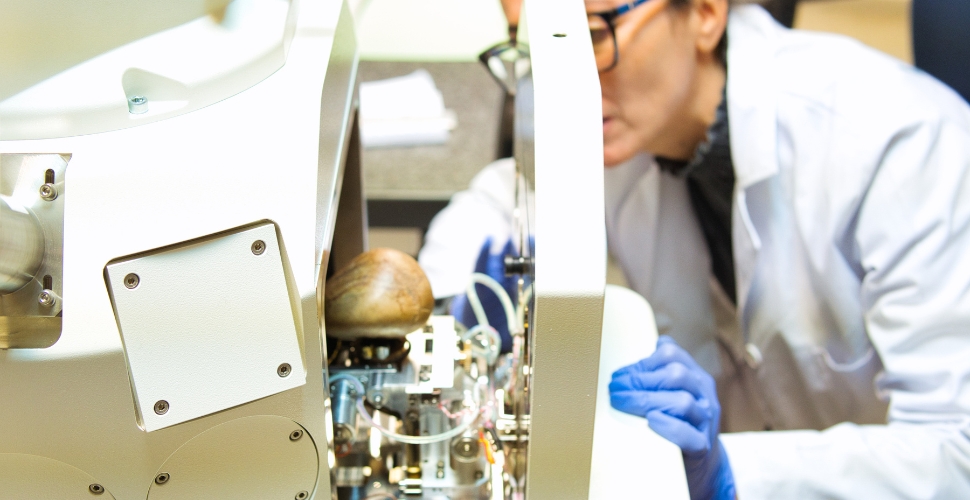
Through European funds, they promote the circular economy with projects such as RECYTRACK. Together with Acciona and ADIF, they reuse tires to create elastomeric railway bases that mitigate vibrations. The safety of these materials is guaranteed by analyzing their matrix with advanced scanning electron microscopy (SEM) and micro-computed tomography (μCT).
In the event of structural failures in chemical plants or tracks, Fracture Mechanics conducts forensic investigations to analyze fatigue and corrosion processes. The group applies international regulations to determine if minimal cracks require the urgent shutdown of a facility to prevent catastrophes.
LADICIM employs high-temperature testing and small punch test (SPT) techniques to detect invisible internal defects in welds. Their expertise has been key in drafting the SINTAP/FITNET European guidelines, establishing the continental standard for auditing metal integrity.
Engineering at a biological scale
The Biomaterials Engineering Unit, in partnership with Valdecilla Hospital and IFIMAV, analyzes bone biopsies to parameterize the mechanical impact of pathologies such as osteoporosis or osteoarthritis.
In the cardiovascular field, the laboratory employs clustering methods and high-precision instruments, such as ultra-micro-hardness testers, to classify the degradation of the human mitral valve.
Technology requires professional talent to be effective. “Knowledge transfer includes training specialists and generating talent in strategic sectors,” highlights José Antonio Casado. Under his direction, ten doctoral theses address engineering challenges, with half achieving an industrial mention, which ensures their commercial applicability.
This academia-industry synergy is consolidated in the UC and MAFEX Master’s Degree in Railway Engineering, which annually integrates graduates into global construction firms. Faced with the ecological transition and extreme weather, the sector demands pragmatic researchers and accurate data to develop sustainable and resilient infrastructures.
Más Noticias