
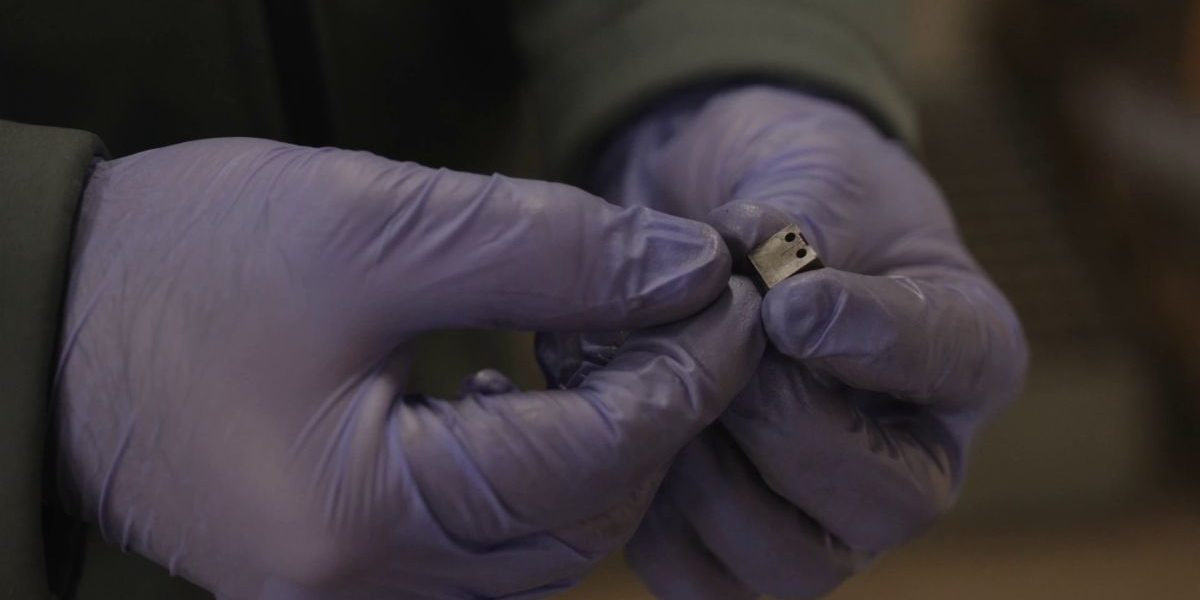
LADICIM is participating in the European project to standardize the use of mini-ct in the nuclear industry
The research aims to modify restrictive international mechanical testing standards to drastically reduce the material required for integrity assessments and extend the service life of reactors
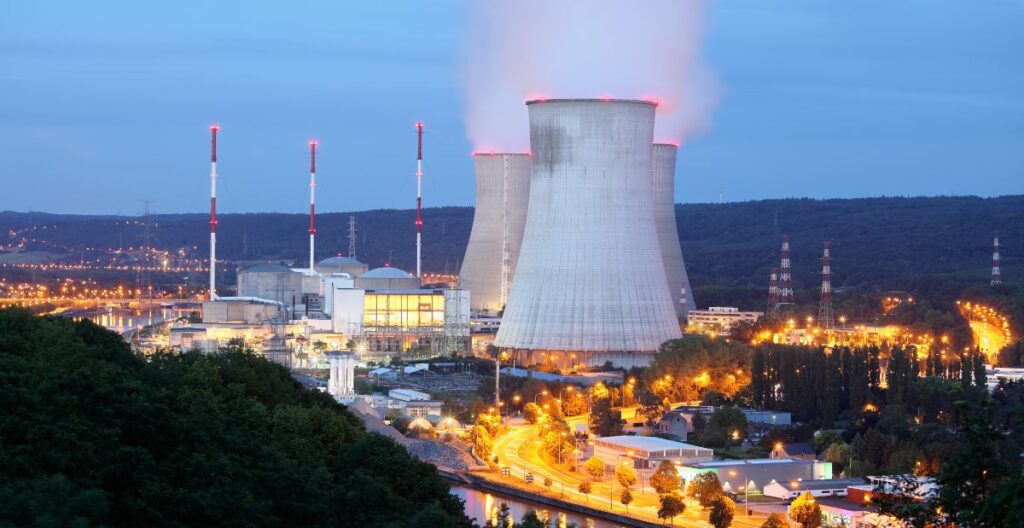
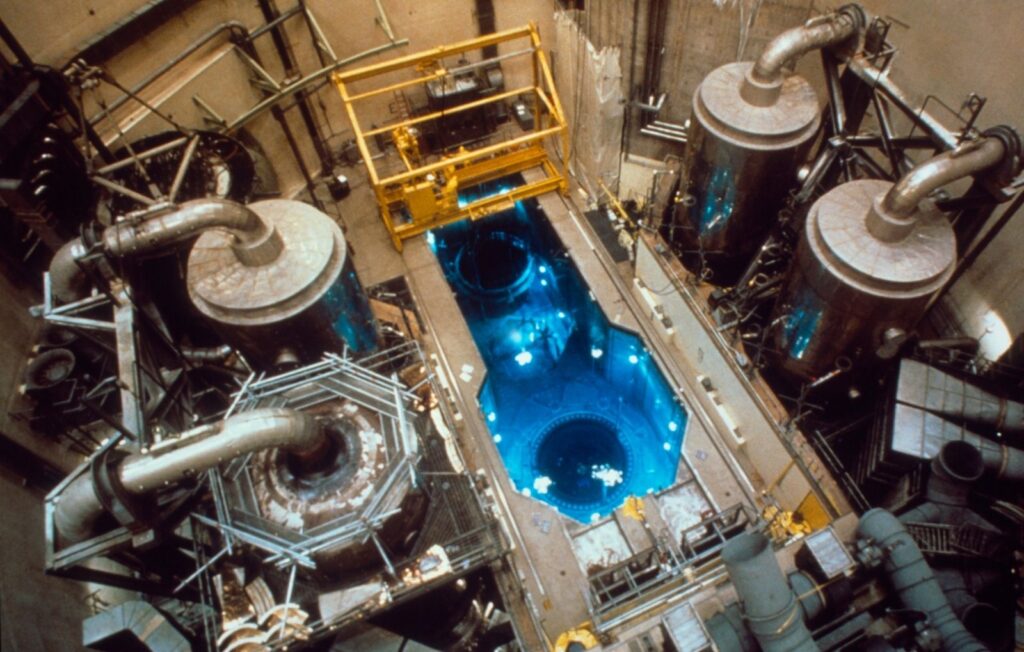
Certifying the structural integrity of a nuclear power plant requires subjecting its components to continuous and highly exhaustive mechanical testing. Extracting metal specimens from an operating reactor to verify how extreme radiation degrades their properties represents, in the industry’s daily practice, an extraordinary logistical and economic challenge. Furthermore, handling large irradiated steel samples requires the use of heavily shielded hot cells and costly specialized transport, a technical bottleneck where the ExAM-FAST project directly intervenes.
Funded by the European Euratom program, under the umbrella of the CONNECT-NM platform, this initiative has a budget of 1.87 million euros to change the materials qualification paradigm. The University of Cantabria assumes a strategic role through LADICIM, forming a consortium alongside the French Atomic Energy Commission (CEA), power utilities such as EDF, and reference centers such as the German HZDR or the Belgian SCK CEN.
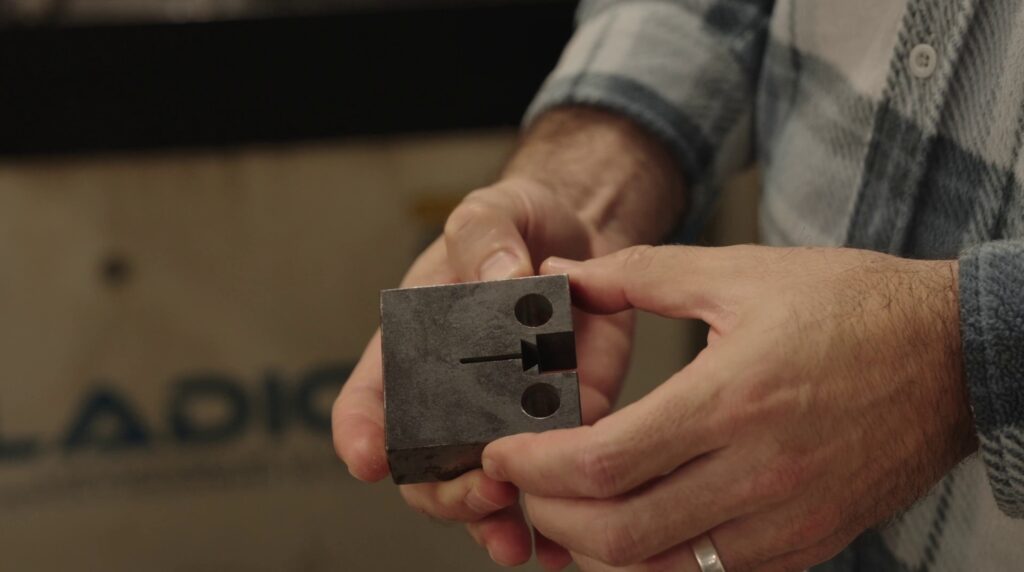
The objective that has brought these institutions together is none other than to demonstrate to regulatory bodies that Mini-CT (Miniaturized Compact Tension) specimens provide reliable and representative data on the material’s actual fracture behavior. These are small steel specimens with thicknesses of barely 4 millimeters that allow for the measurement of fracture toughness using a minimal fraction of material.
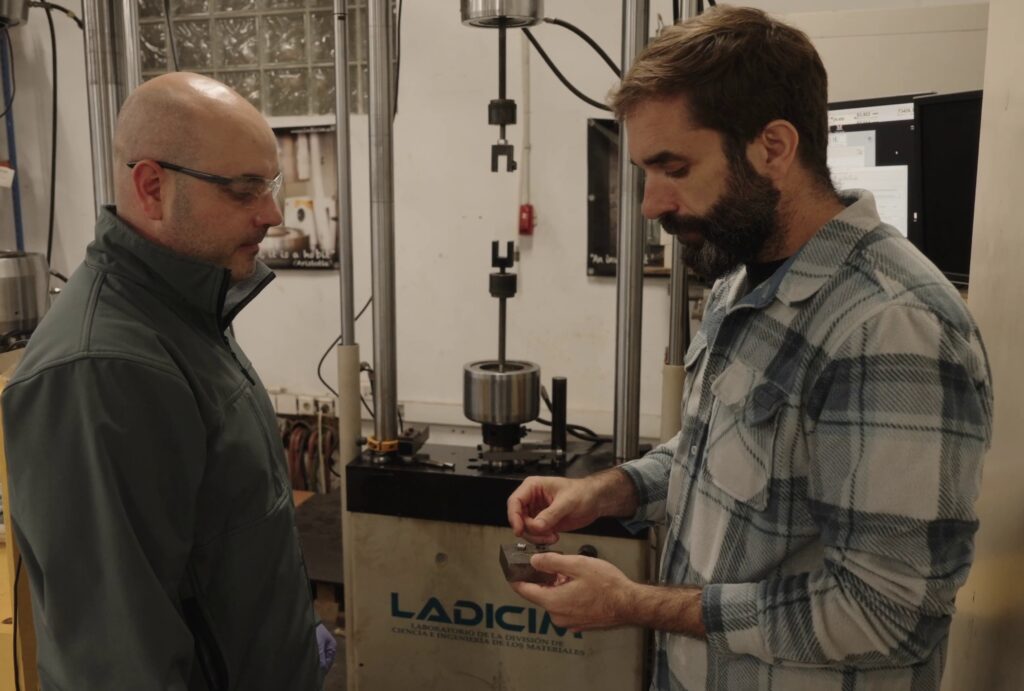
Despite the evident operational advantages of testing miniature specimens, the scientific community is currently facing a regulatory barrier. International standards governing these tests impose validity limits originally designed for large-scale specimens, forcing laboratories to discard a multitude of results that are physically representative of the material simply because they fall outside the theoretical margins that ExAM-FAST aims to update.
The thermal stiffness of the Master Curve
The primary obstacle addressed by the project focuses on the characterization of the ferritic steels that make up the reactor pressure vessel: materials that undergo a ductile-to-brittle transition as temperature decreases. To calculate the exact reference temperature at which this critical change occurs, the industry utilizes the statistical approach known as the Master Curve, validated by the stringent ASTM E1921 standard. The regulation imposes a strict limit by discarding the results of any specimen that fails fifty degrees below its reference temperature. Regulators apply this restriction assuming that such excessive cold alters the microscopic fracture mechanisms, causing the crack to stop initiating from a single focal point. As fracture zones multiply, the well-known weakest-link theory—the mathematical foundation upon which engineers build the material’s Master Curve—is invalidated.
This restriction, which lacks a physical basis, creates an evident problem when evaluating an irradiated material whose reference temperature is still unknown, as dozens of highly valuable specimens end up being discarded if the test was performed in an environment slightly colder than permitted.
“The standard establishes rather restrictive conditions that hinder the experimental process, as results obtained more than fifty degrees below the reference temperature are simply not valid,” explains Sergio Cicero, Professor at the UC and Principal Investigator of LADICIM within the consortium. “We know that these data are indeed useful if certain precautions are taken and if (in particular) it is verified that there is a single point of fracture initiation; therefore, we will attempt to demonstrate that these specimens can be tested beyond the limits of the current standard, providing equally reliable and robust values that facilitate the determination of mechanical properties.”
To provide a basis for this regulatory change, the partners will conduct new fracture toughness testing campaigns at extremely low temperatures. Subsequently, these fracture surfaces will be analyzed using scanning electron microscopy (SEM) to map the damage initiation sites at a micrometric scale. If it is empirically demonstrated that the fundamental failure mechanism remains unaltered at these temperatures, the consortium will officially propose the relaxation of the thermal limit.
Asymmetric cracks and fatigue simulations
Beyond temperature, preparing a 4-millimeter specimen for its final test involves previously generating a macroscopic crack through continuous load cycles (material fatigue). Current standards require the front of this initial crack to be substantially straight, a geometric tolerance that is easily achieved in large-scale specimens but can be difficult in such thin specimens without resorting to side-groove machining, which complicates the experimental process.
Seeking to simplify machining protocols for the entire industry, the consortium will test specimens whose pre-cracks deliberately exceed the allowable curvature and length limits.
The transition to the ductile regime through digital twins
In general, plant structural components operate in a ductile regime. These components are typically manufactured from austenitic stainless steels that maintain an enormous capacity for plastic deformation even after undergoing neutron bombardment processes. Measuring this fracture toughness under ductile conditions using miniature specimens represents an unexplored frontier, as the applicable standard (ASTM E1820) imposes geometric and physical requirements that a 4-millimeter-thick specimen often cannot satisfy.
To bypass this insurmountable physical barrier, the consortium will deploy an innovative hybrid assessment model that merges traditional mechanical testing with advanced computing.
Supporting regulatory changes of this magnitude requires experimenting with a battery of metals that faithfully represents the operational reality of the global nuclear fleet. To this end, the European consortium has designed an aggressive test matrix that combines virgin metals with alloys that have already been heavily irradiated in historical programs.
Global reference steels such as A533B JRQ or the Japanese forging base metal 22NiMoCr3-7 will be tested, in addition to the 73W weld bead, known in technical literature for its high sensitivity to damage due to its copper levels. Seeking to ensure a long-term supply of specimens, a specific irradiation capsule named MIDI will be designed and inserted into the Petten High Flux Reactor, exposing new batches of stainless and ferritic steel to controlled neutron fluxes.
The experimental activity of LADICIM will not be limited solely to the pressure vessel environment. The Cantabrian team will lead tests at its own facilities on SA350 LF3 Cl2 forged steel, the strategic material used in the manufacturing of the heavy metal casks designed for the safe storage and transport of spent nuclear fuel.
Statistical noise of inhomogeneity
No industrial steel block is microstructurally perfect. All exhibit slight microscopic variations in their crystal lattice and microstructure, a phenomenon of inhomogeneity that usually goes unnoticed in large samples but is drastically magnified when testing 4-millimeter specimens. If by chance several miniature specimens extracted from the same block contain microstructurally disparate zones, the statistical scatter of the results is altered, confounding the global calculation of material safety.
To isolate this statistical “noise,” the consortium will employ massive mathematical analysis routines that will simulate artificial datasets mimicking these internal variations. By cross-referencing these virtual scenarios with the actual fractures achieved by the other laboratories, experts will accurately determine how many valid specimens are strictly necessary to neutralize the inhomogeneity and obtain a valid, safe reference temperature free of false positives.
This entire flood of mechanical parameters, fractographic analyses, and simulations will be progressively uploaded to NM-KOS, the major unified knowledge management system that the European Union is building to connect its entire network of researchers.
Artificial intelligence and consolidated experience
The University of Cantabria’s central role in drafting the new ExAM-FAST protocols reflects the significant standing that LADICIM has gained within the European nuclear landscape. Its current participation is built upon the success of previous continental projects where the Laboratory already demonstrated its capacity to bridge materials science and engineering with modern data science.
LADICIM acted as a foundational partner in FRACTESUS, the first major community initiative that established the groundwork for the geometric acceptance of sub-size specimens. Simultaneously, the Laboratory currently leads the artificial intelligence work package of the Extend-LTO project, designing complex neural networks and Machine Learning algorithms capable of predicting long-term atomic degradation induced by nickel and manganese. Mastering this technological frontier, known today as Materials Informatics, positions the university group as the ideal partner to coordinate the massive data assimilation required to validate a new international standard.
Achieving regulatory backing for the routine use of Mini-CT specimens will fundamentally transform the maintenance programs of current power plants, while also opening a fast and cost-effective pathway to qualify experimental alloys and 3D-printed components that will shape Generation IV reactors. An essential regulatory leap to ensure that future energy infrastructures remain safe, cost-effective, and emission-free.
Más Noticias
LADICIM participates in the European Extend-LTO project for the long-term operation of nuclear power plants
The University of Cantabria Laboratory will lead the application of artificial intelligence and big data management to predict the degradation of steels subjected to extreme
LADICIM participates in Ecoflowing, the project driving the decarbonization of construction
In collaboration with the Technology Centre of Components (CTC), the initiative designs industrializable mixes based on waste valorization that will reduce the sector’s carbon footprint
LADICIM collaborates with Valdecilla and IDIVAL to prevent structural failure of the heart and skeleton
Researchers from the University of Cantabria forge an alliance with clinical specialists to translate strict material fatigue methodologies to living tissue, transforming the treatment of