
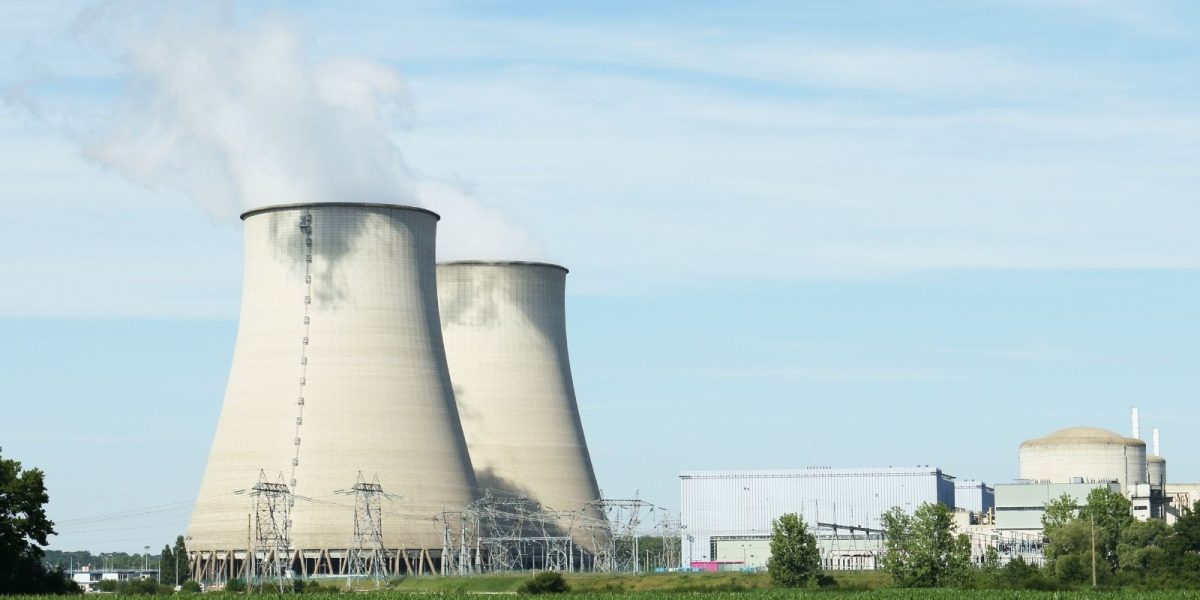
LADICIM participates in the European Extend-LTO project for the long-term operation of nuclear power plants
The University of Cantabria Laboratory will lead the application of artificial intelligence and big data management to predict the degradation of steels subjected to extreme irradiation
Ensuring an uninterrupted and CO2 emission-free power supply is Europe’s top priority. Complying with the current EU green taxonomy mandates keeping existing nuclear power plants fully operational. However, extending their service life beyond the original design requires structural analysis methods of near-surgical precision. This is the technological challenge addressed by Extend-LTO.
Framed within the Euratom CONNECT-NM initiative (Research Line 5), this research kicks off with total funding of 2.1 million euros and a 42-month work horizon. The University of Cantabria (UC) channels its strategic contribution through the Laboratory of the Materials Science and Engineering Division (LADICIM). Its research team assumes a critical dual responsibility within the consortium: leading big data management and designing the mathematical algorithms that will predict facility ageing.
The reactor core and the nickel problem
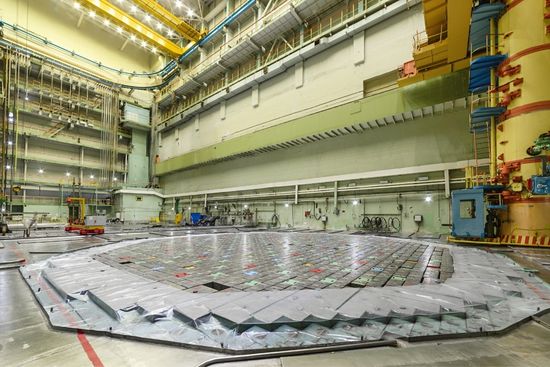
Exceeding the 60-year threshold of uninterrupted operation subjects plant components to relentless physical wear and tear. Industry attention is focused on one specific element: the reactor pressure vessel (RPV). We are referring to a massive special steel capsule, irreplaceable throughout the plant’s service life, which constantly withstands extreme temperatures, high pressures, and incessant neutron bombardment from the core.
This continuous radiation alters the internal microstructure of the metal. The Extend-LTO project focuses on light water reactors (LWR) manufactured with steels containing high proportions of Nickel (Ni) and Manganese (Mn). When neutrons strike the steel’s crystal lattice, they displace atoms from their original positions. Nickel and manganese exploit these microscopic defects to migrate and aggregate, forming nanometer-scale clusters.
These invisible accumulations act as internal obstacles that block the natural movement of dislocations within the material. The result at the macroscopic level is known as irradiation embrittlement: the steel becomes harder but drastically loses its original toughness against potential impacts or sudden temperature changes.
Unraveling the exact kinetics of this degradation requires an international scientific effort. Murthy Kolluri, from the Dutch institute NRG PALLAS, coordinates this European consortium. Providing expertise in structural analysis requires the participation of the Spanish CIEMAT, the HZDR center, and the multinational Framatome in Germany, along with the URN-GPM laboratory in France and HUN-REN-CER in Hungary. Completing the physical testing and simulation network also involves STUBA (Slovakia) and UJV (Czech Republic). The project also carries the institutional weight of the European Commission’s JRC. Integrating information beyond EU borders is the task of the British UKNNL and two Ukrainian scientific institutions: the NSC KIPT and KINR. All these entities join forces with the University of Cantabria (LADICIM) under a clear mission: to analyze the radiological damage of steels using atomic-scale characterization techniques.
'Healing' steel through extreme heat
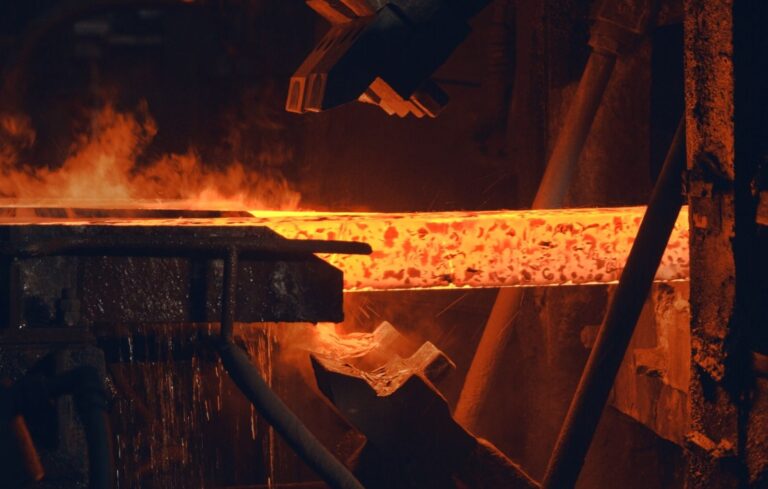
Understanding the magnitude of damage in these alloy steels is only the first operational phase. The true objective of the industry is to combat it. European researchers seek to optimize and validate post-irradiation thermal annealing (PIA, Post-Irradiation Annealing) as the primary mitigation strategy for long-term operation.
The technique is as remarkable as it is complex. It consists of isolating the core and applying extreme heat (typically above 450 degrees Celsius) directly to the inner wall of the vessel for several days. This massive injection of thermal energy allows the atoms to regain their mobility. Nickel and manganese clusters dissolve. The crystalline lattice reorganizes and the material “heals.” This process largely reverses the accumulated embrittlement, restoring the mechanical properties required for the vessel to operate with a full safety margin for additional decades.
LADICIM's Artificial Intelligence
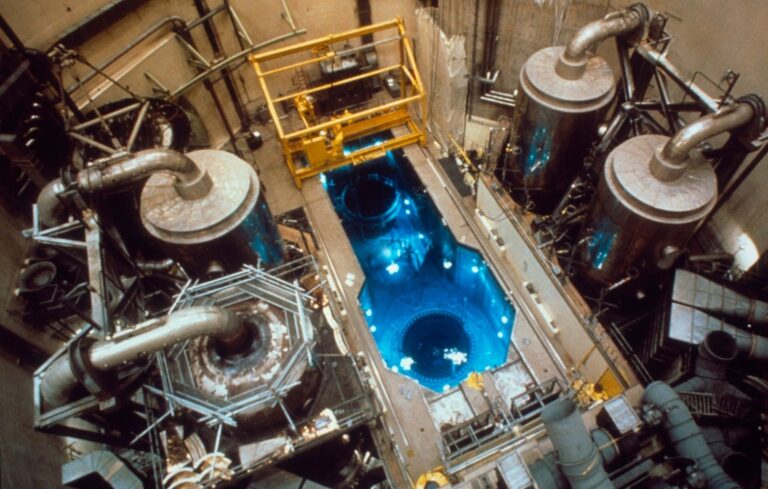
Physically assessing the effectiveness of these recovery treatments poses an immense logistical and economic challenge. Experimentally testing irradiated steel specimens requires working within heavily shielded hot cells. These are scarce facilities worldwide, where any procedure is extremely slow, complex, and costly.
Replacing part of that physical experimentation with digital simulation is the significant added value provided by the Cantabrian Laboratory. The group led by Professor Diego Ferreño first co-leads the work package that requires collecting, cleaning, and harmonizing databases from historical European tests, such as campaigns conducted in High Flux Reactors (HFR). All this vast amount of digitized information will feed and expand the capabilities of the continental platform ENTENTE.
“Our goal is to find hidden patterns and correlations by cross-referencing historical experimentation with the most recent damage metrics available in Europe,” Professor Ferreño explains regarding this meticulous data mining process.
Training computer systems with this volume of information avoids absolute reliance on destructive testing in hot cells and saves the sector years of development and millions in investment. In addition to this challenge, LADICIM also leads tasks purely oriented towards the field of prediction and advanced modeling.
UC engineers will apply state-of-the-art Machine Learning routines. They will employ decision-tree-based boosting algorithms (such as XGBoost) and configure complex artificial neural networks (ANN). By feeding these systems with variables such as the chemical composition of the steel, neutron flux, and operating temperatures, they will build robust mathematical models.
These tools will anticipate exactly how the microstructure of a specific steel will react to future continuous radiation and annealing cycles. A crucial aspect in this phase will be the implementation of Explainable Artificial Intelligence (XAI) approaches. LADICIM’s models must clearly explain the weight of each physical variable in their final predictions.
Evolution towards Materials Informatics
This level of scientific responsibility underpins the prestige of LADICIM, forged over more than thirty years of research activity at the School of Civil Engineering of Santander. Its track record demonstrates a steady evolution.
The Laboratory has a solid track record in the development of major Euratom initiatives. Its researchers were already key players in projects such as FRACTESUS, where they validated the use of miniature specimens (Mini-CT) at a European level. This mechanical innovation allows for the measurement of fracture toughness using nearly minute fragments of irradiated material, optimizing the invaluable space within test reactors. Subsequently, they led the database architecture for the ENTENTE initiative.
Mastering this technological frontier, today dubbed Materials Informatics, allows the Cantabrian researchers to seamlessly bridge in-depth expertise in classical metallurgy with programming languages and modern data science.
Direct transfer to industry
Generating academic knowledge is fundamental, but converting it into a usable industrial tool forms the backbone of the final phase of Extend-LTO. All simulation and characterization efforts will converge in the work package led by the German-French multinational Framatome.
The company will condense the artificial intelligence models developed in Cantabria, along with experimental data from the other partners, into technical guidelines for direct application. These guidelines will provide nuclear power plant operators with a series of fully objective criteria. They will know the exact moment to apply thermal annealing treatment to their pressure vessels and the precise temperature and time parameters.
Laboratory research is thus transformed into pragmatic and standardized maintenance solutions. A decisive step to secure the technical viability of the European nuclear fleet, minimizing operational uncertainty and safeguarding the continent’s energy sovereignty against the challenges of the immediate future.

Más Noticias
LADICIM collaborates in the Freedom project to improve the safety of nuclear power plants
The research, coordinated by CIEMAT, delves into the use of mini-CT specimens and Artificial Intelligence to characterize the integrity of the reactor pressure vessel in

LADICIM aims to fortify floating wind with more durable, safer and more sustainable platforms
In a consortium with SEAPLACE, IHCantabria, and UPM, the Cantabrian laboratory will lead the development of green and self-healing concretes to optimize the CROWN floating
LADICIM participates in European project that applies AI to extend the life of nuclear power plants
ENTENTE, coordinated by CIEMAT, lays the groundwork for Materials Informatics to more accurately predict reactor vessel degradation and enhance the safety of its long-term operation