
Soraya Diego and Sergio Cicero win two UC Solutions Awards for their decarbonization and Industry 4.0 proposals
Both LADICIM researchers have been recognized in the II Call for the Promotion of Industrial Competitiveness of the University of Cantabria. Their work proposes circular solutions for the railway sector and validation methods for clean energy materials.
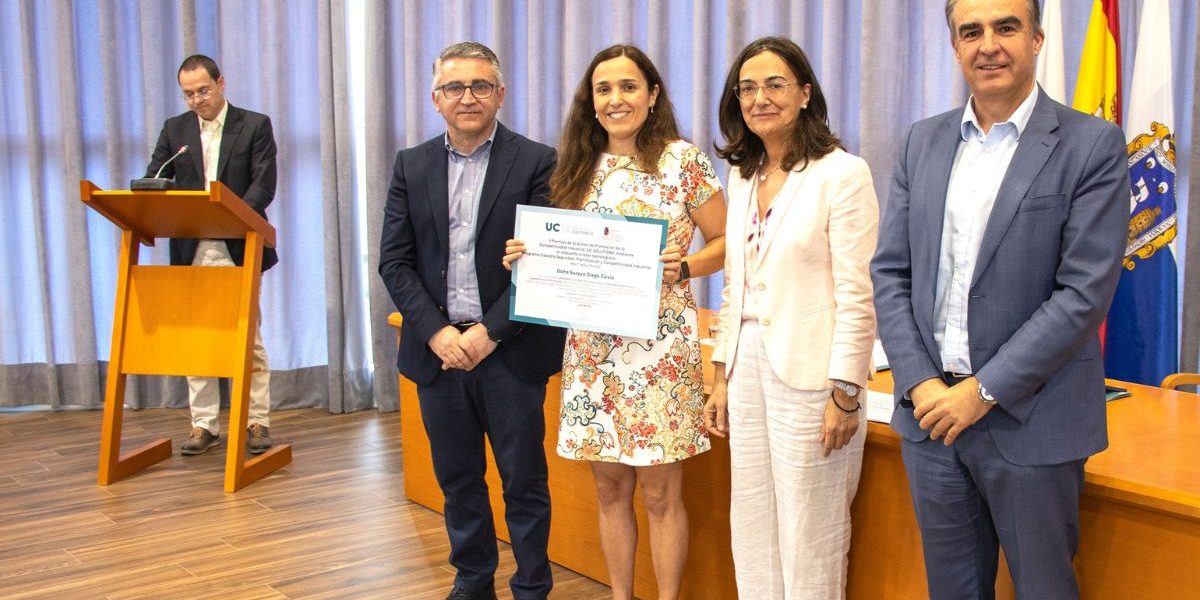
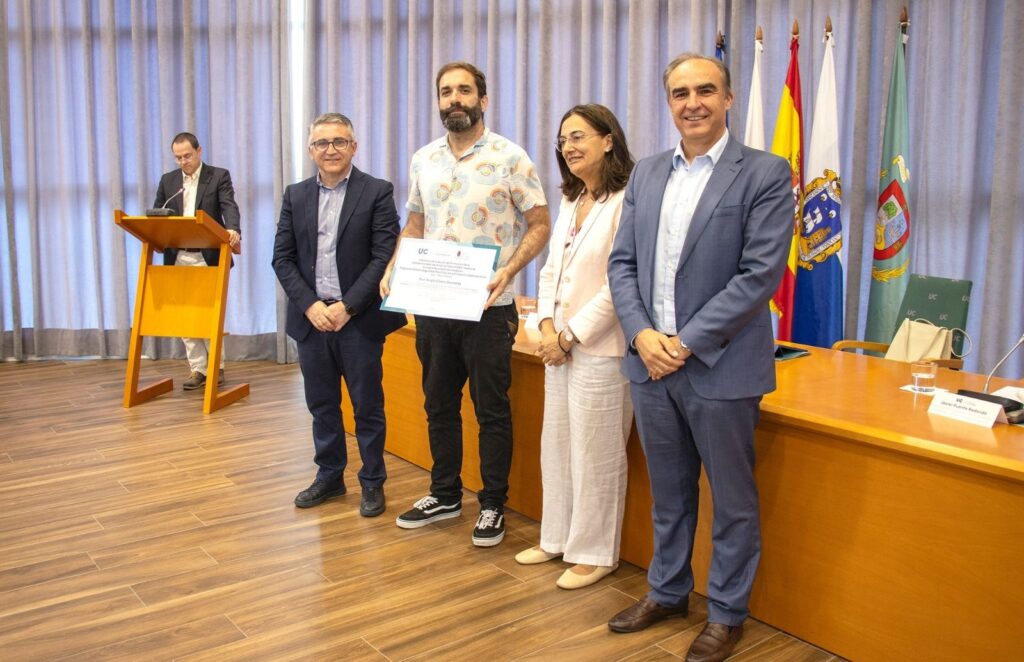
The transfer of scientific knowledge to the productive sector is key to addressing current climate challenges. On June 17, the University of Cantabria (UC) presented the awards for the II Call for the promotion of industrial competitiveness UC Solutions. Among the winners are Soraya Diego Cavia and Sergio Cicero González, researchers from the Laboratory of the Science and Engineering of Materials Division (LADICIM).
These awards are part of the Security, Planning, and Industrial Competitiveness Chair Program, developed alongside the Directorate General for Industry, Energy, and Mines of the Government of Cantabria. The objective of this initiative is to encourage researchers to formulate viable technological responses for the regional business ecosystem. The two submissions from LADICIM staff competed within Challenge 1: Industry 4.0, an area covering automation, energy sustainability, and decarbonization.
Clean Energy and Rail
Each researcher provided a distinct technical solution. Professor Sergio Cicero leads the proposal Accelerated qualification of structural materials for new sustainable energies: a strategic contribution from the UC. His work aims to streamline the rigorous mechanical validation processes for critical components required by the deployment of renewable energy facilities.
The project by Soraya Diego, head of the LADICIM Railway Laboratory, titled GREENPAD 4.0: Circular solution for the decarbonization of the railway superstructure, proposes an alternative that applies the reuse of materials directly to track components. Both lines of research demonstrate that integrating the circular economy into heavy engineering is technically possible and necessary.
Achieving these awards reflects the work that the Cantabrian Laboratory has been carrying out for decades. LADICIM’s facilities host numerous tests for the railway sector, evaluating the fatigue behavior of sleepers or high-speed fastening systems, as well as conducting fracture mechanics analysis on parts subjected to severe conditions. This extensive field experience provides the foundation that allows researchers to formulate initiatives such as GREENPAD 4.0 with high methodological rigor.
“What we are recognizing is a career path, an ability to generate ideas, to move them forward, and to never settle,” noted the Rector of the UC, Conchi López, while addressing the scientists during the ceremony held in the Gómez Laá Room. The advancements tested in the laboratories will transcend the academic sphere to become tools that will improve industrial efficiency in the short term.
Más Noticias

LADICIM aims to fortify floating wind with more durable, safer and more sustainable platforms
In a consortium with SEAPLACE, IHCantabria, and UPM, the Cantabrian laboratory will lead the development of green and self-healing concretes to optimize the CROWN floating
LADICIM participates in European project that applies AI to extend the life of nuclear power plants
ENTENTE, coordinated by CIEMAT, lays the groundwork for Materials Informatics to more accurately predict reactor vessel degradation and enhance the safety of its long-term operation

LADICIM consolidates progress of the INTELEST project in AI for sustainable energy and transportation
The University of Cantabria Laboratory advances in the development of predictive models for nuclear safety, offshore wind power, and the maintenance of high-performance railway infrastructure,